
Passing the DTZ exam is one of the most important milestones for immigrants in Germany, whether you are working toward a permanent residency permit or advancing your career. Yet many candidates feel overwhelmed by the exam’s four sections, unclear scoring rules, and the pressure of a timed speaking test with a partner they may have just met. The good news is that with the right strategy and consistent practice, passing is absolutely within reach. This guide walks you through every section of the DTZ, explains exactly what the scoring requires, and gives you a practical, step-by-step preparation plan you can start using today.
Table of Contents
- What is the DTZ exam and why does it matter?
- DTZ exam structure and scoring explained
- Essential tools and resources for DTZ preparation
- Step-by-step DTZ preparation guide: How to master each section
- Troubleshooting and common mistakes on the DTZ exam
- How to verify results and next steps after the DTZ exam
- Accelerate your DTZ success with targeted resources
- Frequently asked questions
Key Takeaways
| Point | Details |
|---|---|
| DTZ exam essentials | Understand the DTZ’s purpose, structure, and required levels before you start studying. |
| Speaking is mandatory | B1 in speaking is required for passing, so focus your prep on this section. |
| Consistent practice wins | Daily immersion and using official mock exams lead to higher pass rates than last-minute cramming. |
| Common mistakes | Avoid skipping instructions or neglecting pair speaking practice to maximize your score. |
| Use targeted resources | Leverage online platforms and guided materials for efficient preparation and confidence. |
What is the DTZ exam and why does it matter?
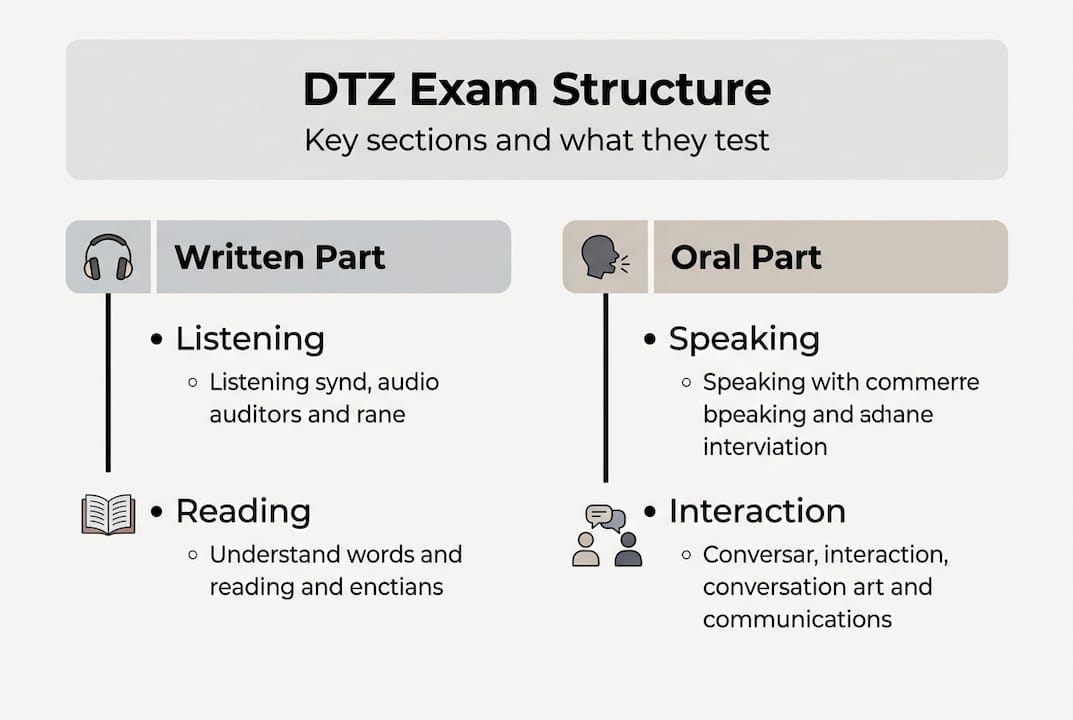
The DTZ, short for Deutsch-Test für Zuwanderer, is a standardized B1/A2 exam for immigrants who participate in Germany’s official integration courses, administered by BAMF (Bundesamt für Migration und Flüchtlinge). It tests four core language skills: listening (Hören), reading (Lesen), writing (Schreiben), and speaking (Sprechen).
Why does it matter so much? Because the DTZ certificate is required for residency and citizenship applications in Germany. Without it, your path to a permanent permit or naturalization can stall completely. For many learners, this exam is not optional; it is a legal requirement tied directly to their future in the country.
Here is a quick overview of what the exam covers:
| Section | Skill tested | Format |
|---|---|---|
| Hören | Listening comprehension | Audio recordings, multiple choice |
| Lesen | Reading comprehension | Texts, matching, true/false |
| Schreiben | Written communication | Formal/informal letter |
| Sprechen | Oral communication | Pair exam with a partner |
You can explore a full DTZ exam overview to understand the test format before you begin your preparation.
DTZ exam structure and scoring explained
Now that you know why passing matters, let’s examine how the test is structured and how you can achieve a passing score.
The written part lasts 100 minutes total: Hören takes 25 minutes and is worth 25 points, Lesen takes 45 minutes and is worth 25 points, and Schreiben takes 30 minutes and is worth 20 points. The Schreiben task typically asks you to write a letter of 80 to 100 words. The oral part (Sprechen) lasts 15 to 20 minutes and is conducted as a pair exam. You will introduce yourself, describe a picture or topic, and plan an activity together with your partner.

To earn a B1 certificate, you must achieve B1 in speaking plus at least one other module, such as a combined passing score in listening and reading, or a passing score in writing. This is a critical rule that many candidates miss.
Here is the scoring breakdown at a glance:
- Hören: 25 points maximum, 25 minutes
- Lesen: 25 points maximum, 45 minutes
- Schreiben: 20 points maximum, 30 minutes
- Sprechen: Assessed separately at A2 or B1 level
For targeted skill building, try DTZ reading practice and DTZ listening practice to get comfortable with the real question formats before exam day.
Essential tools and resources for DTZ preparation
Understanding the exam format is only half the battle; next, let’s assemble the resources you’ll need to prepare effectively.
Consistent immersion beats cramming every time, and official BAMF mock exams are essential for building familiarity with the actual test format. Here is what your preparation toolkit should include:
- Official BAMF mock exams: These replicate the real exam format and are the single most reliable way to calibrate your readiness.
- Pair speaking simulations: Find a study partner or join a language group to practice the Sprechen section under timed conditions.
- Online grammar and vocabulary tools: Focus on everyday German used in integration contexts, not academic or literary language.
- Daily immersion habits: Watch German news, listen to podcasts, and read short articles every day. Even 20 minutes of daily exposure compounds quickly.
- Targeted section practice: Use resources like DTZ reading section tips and DTZ speaking practice to address your weakest areas first.
Pro Tip: Do not wait until you feel “ready” to take a mock exam. Take one in your first week of preparation to identify your gaps early, then build your study plan around those specific weaknesses.
Step-by-step DTZ preparation guide: How to master each section
With your tools ready, let’s walk through the steps required to build exam-ready skills for each part.
-
Master Hören first. Start with listening because it trains your ear for the speed and accent of real German speech. Listen to short audio clips daily, then answer comprehension questions. Focus on catching keywords rather than understanding every word.
-
Build Lesen stamina. Reading under time pressure is a skill in itself. Practice reading texts quickly and scanning for specific information. The DTZ advanced reading practice section offers exercises that mirror the actual exam difficulty.
-
Practice Schreiben with structure. Your letter must be 80 to 100 words and address all the points in the prompt. Practice writing within this word count every day. Use a simple structure: greeting, main points, closing. Ask someone to check your grammar or use an AI writing tool.
-
Prioritize Sprechen above all else. Speaking practice is mandatory for B1, and pair simulations are the best way to prepare. Practice introducing yourself, describing images, and negotiating a plan with a partner. Use DTZ speaking practice resources to rehearse real exam topics.
-
Run full timed mock exams. In the final two weeks before your exam, complete at least two full mock tests under real conditions. This builds mental endurance and reduces exam-day anxiety.
“The candidates who pass consistently are those who practice speaking out loud with another person, not just in their head.” This is the single most overlooked step in DTZ preparation.
Pro Tip: Record yourself during speaking practice. Listening back reveals pronunciation habits and filler words you may not notice in the moment.
Troubleshooting and common mistakes on the DTZ exam
Even the best preparation can fall short if you don’t recognize and avoid common mistakes. Here are the key pitfalls and how to overcome them.
- Skipping pair speaking practice: Many candidates underestimate how different speaking with a real partner feels compared to solo practice. The pair format requires active listening and real-time response, not just memorized phrases.
- Ignoring the Schreiben format: Writing a letter that is too short, too long, or missing required points costs you points even if your German is strong. Always check the prompt carefully and address every item.
- Cramming instead of consistent learning: Studying intensively for one week before the exam rarely works. German language skills build through repeated exposure over time. A steady 30 to 45 minutes daily over several weeks outperforms a last-minute sprint.
- Skipping instructions during the exam: Many candidates lose easy points by misreading task instructions. Read every question twice before answering.
Slow down during the exam. Rushing through instructions is one of the most common and most avoidable sources of lost points.
For targeted skill work, revisit DTZ reading strategies and DTZ listening tips to reinforce the areas where mistakes are most costly.
How to verify results and next steps after the DTZ exam
Once your exam is complete, interpreting your results and knowing your next steps is crucial for your residency or professional goals.
To pass at B1, you need a minimum of 60 points overall and a B1 rating in the speaking section. Scores between 33 and 59 points typically result in an A2 certificate, depending on your specific section combinations.
Here is what to do after you receive your results:
- If you pass at B1: Submit your certificate to the relevant immigration authority (Ausländerbehörde) or employer as required. Keep a certified copy for your records.
- If you receive A2: Review which sections pulled your score down and build a targeted study plan before retaking. An A2 result is not a failure; it is a clear signal of where to focus next.
- Plan your next language goal: Many learners use the DTZ as a stepping stone toward B2 or higher, which opens doors to university programs and professional licensing in Germany.
- Explore further resources: The DTZ test resources page offers materials to support both retake preparation and advancement to higher levels.
Accelerate your DTZ success with targeted resources
Ready to take your preparation further? Deutsch-Pruefung.de gives you everything you need to walk into the DTZ exam with confidence.
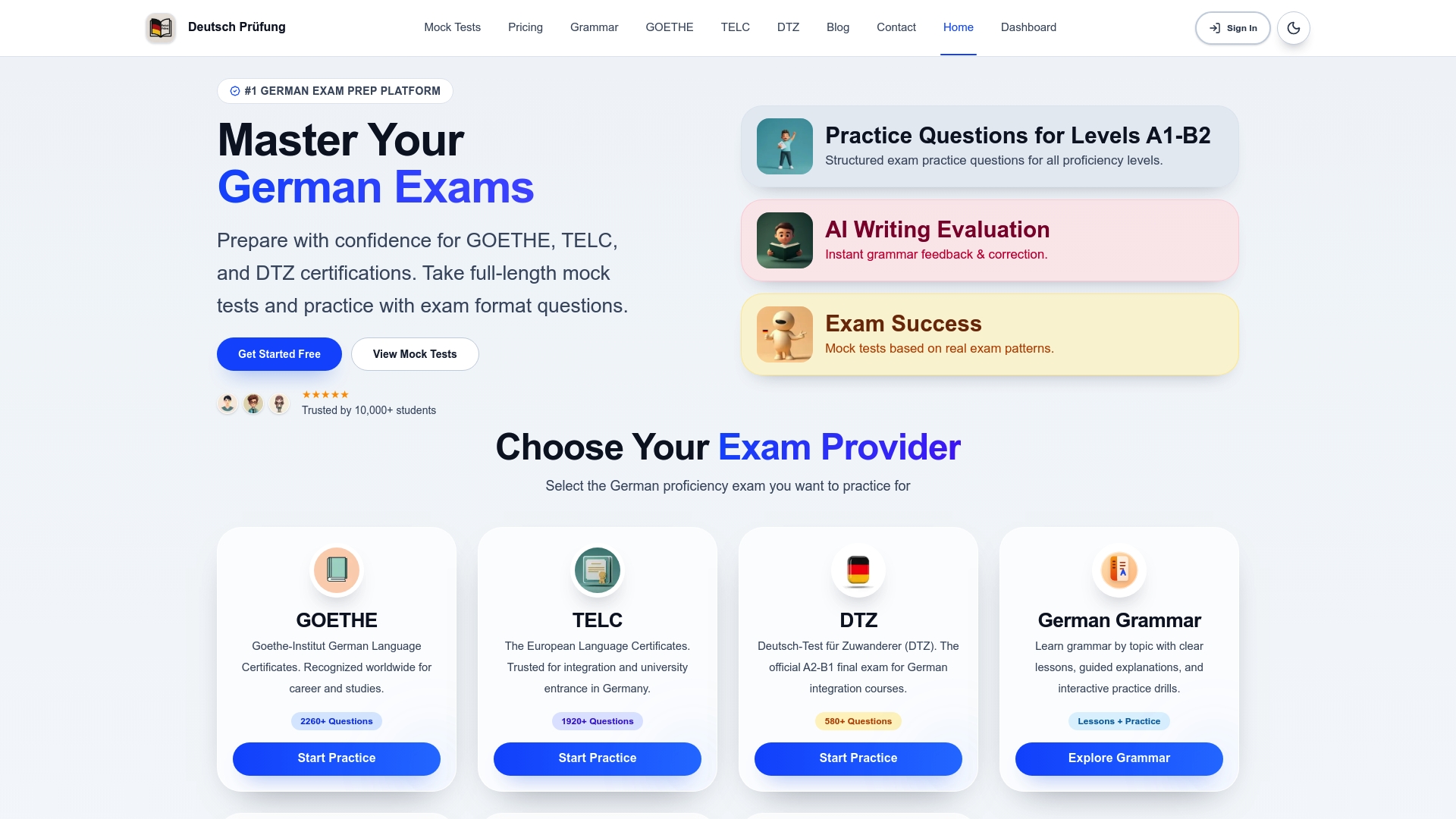
The platform offers full DTZ practice materials covering all four exam sections, including audio exercises for Hören, timed reading sets for Lesen, AI-powered feedback for Schreiben, and speaking topic guides for Sprechen. You can also strengthen your foundation with the German grammar guide and measure your readiness with a full-length practice mock test that mirrors the real exam format. Free trial options mean you can start today without any commitment, and flexible subscription plans let you scale your practice as your exam date approaches.
Frequently asked questions
How many points do I need to pass the DTZ exam at B1 level?
You need at least 60 points overall and a B1 rating in the speaking section to earn a B1 DTZ certificate.
Is the speaking section mandatory to get B1 in DTZ?
Yes, B1 in speaking is a non-negotiable requirement for a B1 DTZ certificate, regardless of your scores in other sections.
What happens if I don’t pass all DTZ sections at B1?
If your overall score falls between 33 and 59 points or your speaking does not reach B1, you will typically receive an A2 certificate instead, which you can use to plan your next attempt.
Are official BAMF mock exams really needed for DTZ preparation?
Yes. Official BAMF mocks are the most accurate way to experience the real exam format, timing, and question types before test day.
How can I improve pair speaking performance for DTZ?
Practice regularly with a partner using timed simulations, review common DTZ speaking topics, and record yourself to catch errors and build natural fluency before the exam.
Recommended
- DTZ - Deutsch-Test für Zuwanderer (A2-B1) Practice | Deutsch Prüfung
- DTZ Lesen (Reading) Practice | Deutsch-Test für Zuwanderer
- DTZ Schreiben (Writing) Practice | Deutsch-Test für Zuwanderer
- DTZ Sprechen (Speaking) Practice | Deutsch-Test für Zuwanderer
- How to prepare for ESS exams: proven strategies for IB success